What is MDSAP?
The MDSAP (Medical Device Single Audit Program) is an international certification program for the quality management systems of medical device manufacturers. This program is based on the requirements of the ISO 13485:2016 standard and on the regulatory requirements of several countries.
The program aims to facilitate access to several markets while reducing the number of regulatory audits
Which countries and requirements are covered by the MDSAP?
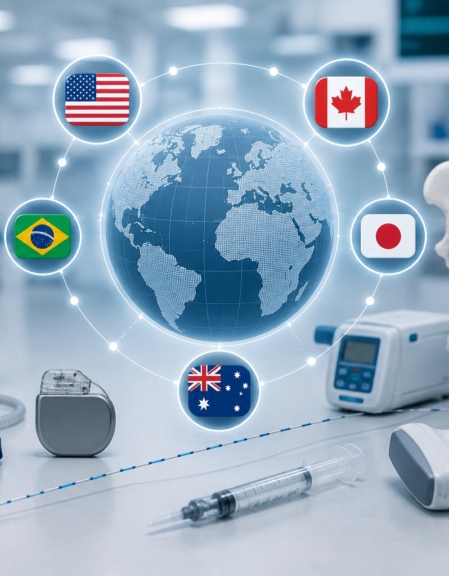
The MDSAP program covers the following markets: Australia, Brazil, Canada, the United States, and Japan.
The MDSAP audit covers the requirements of ISO 13485:2016 as well as the applicable regulatory requirements of the participating authorities. The MDSAP enables compliance with the following quality management system requirements:
- Medical Devices — Quality Management Systems — Requirements for Regulatory Purposes (ISO 13485:2016)
- Conformity Assessment Procedures under the Australian Therapeutics Goods (Medical Devices) Regulations (TG(MD)R, Schedule 3)
- Brazilian Good Manufacturing Practices (ANVISA Circular No. 16/2013)
- Japanese QMS Ordinance (MHLW MO 169)
- Quality System Regulation (21 CFR Part 820)
The MDSAP requirements are those of ISO 13485, supplemented by the specific requirements of the five countries covered by this program.
As of January 1, 2019, a valid MDSAP certificate is required for manufacturers of Class II, III, and IV medical devices in order to obtain, maintain, or amend a license in Canada.
Our Support
Our services can be tailored to your level of readiness: establishing a quality system, adapting an existing ISO 13485 system, or preparing for an MDSAP audit.
- MDSAP Gap Analysis – We conduct an analysis of your quality system to identify gaps between your current practices and the MDSAP requirements. This analysis helps determine the necessary adjustments to your quality processes, procedures, forms, and records.
- Defining the Action Plan – Following the gap analysis, we develop an action plan tailored to your organization, your medical devices, and your target markets. This allows us to prioritize the adjustments that need to be implemented before the MDSAP audit.
- Documentation System Update – We assist you in updating your quality manual, procedures, and all necessary records to meet the requirements of ISO 13485 and MDSAP.
- MDSAP Audit Preparation – Preparing for the audit requires ensuring that the requirements are understood, implemented, and verifiable by the teams. We support you in preparing for the audit, specifically by:
- Review of the audited processes;
- Verification of the available evidence;
- Training process operators;
- Conducting an internal audit;
- Identifying sensitive areas;
This preparation helps ensure a successful audit and strengthens the organization’s ability to demonstrate a consistent and well-managed quality system.
- Post-Audit Support – Finally, in the event of nonconformities, we can assist you in analyzing the causes, defining corrective actions, and preparing responses to submit to the auditing body.
Frequently Asked Questions About MDSAP
The MDSAP program is recognized by five regulatory authorities:
- Australia: Therapeutic Goods Administration (TGA)
- Brazil: ANVISA
- Canada: Health Canada
- United States: Food and Drug Administration (FDA)
- Japan: Ministry of Health, Labor and Welfare (MHLW) and Pharmaceuticals and Medical Devices Agency (PMDA)
The MDSAP is mandatory in Canada for manufacturers seeking to obtain, maintain, or amend a marketing authorization for Class II, III, or IV medical devices.
In the other participating countries, it is not mandatory but serves as recognized proof of compliance that can simplify certain regulatory procedures or reduce the number of inspections.
No. The MDSAP is based on the ISO 13485:2016 standard, but it goes further by incorporating the specific regulatory requirements of the participating authorities.
A company certified to ISO 13485 will generally need to supplement its quality management system to meet the specific requirements of the MDSAP program.
ISO 13485 defines the requirements for the quality management system of medical device manufacturers.
The MDSAP uses this standard as a basis but also verifies compliance with the national regulatory requirements of five international markets.
The program also requires a specific audit methodology based on processes and the assessment of the interactions between them.
In particular, the MDSAP allows you to:
- Facilitate access to several international markets;
- Limit the proliferation of regulatory audits;
- Demonstrate compliance with the quality system to various authorities;
- Improve process and risk management;
- Build trust with customers and partners;
- Prepare for regulatory inspections with greater peace of mind.
Profits vary by country:
- Canada (Health Canada): MDSAP certification is required to obtain, maintain, or amend a marketing authorization for Class II, III, and IV medical devices.
- United States (FDA): MDSAP audit reports can replace routine FDA inspections, with a pre-scheduled audit and more favorable deadlines for addressing nonconformities.
- Brazil (ANVISA): MDSAP reports can replace certain inspections related to Good Manufacturing Practices (GMP), thereby speeding up the market access process.
- Japan (MHLW/PMDA): MDSAP reports can reduce the number of on-site inspections and simplify the quality management system inspection dossier.
- Australia (TGA): MDSAP reports are accepted as evidence in conformity assessment and marketing authorization procedures.
In summary, the MDSAP helps reduce the number of regulatory audits, facilitates access to several international markets, and demonstrates compliance with a harmonized set of regulatory requirements.
The duration of an audit depends on several criteria defined by the program, including:
- The number of employees;
- The number of sites;
- The complexity of the activities;
- Covered markets.
It is generally more comprehensive than an ISO 13485 audit alone, as it assesses the regulatory requirements of multiple jurisdictions.